Sydney PhD student produces first comprehensive classification and map of Martian soils
A University of Sydney PhD student has classified almost 800 million Martian locations into 2,000 soil classes.
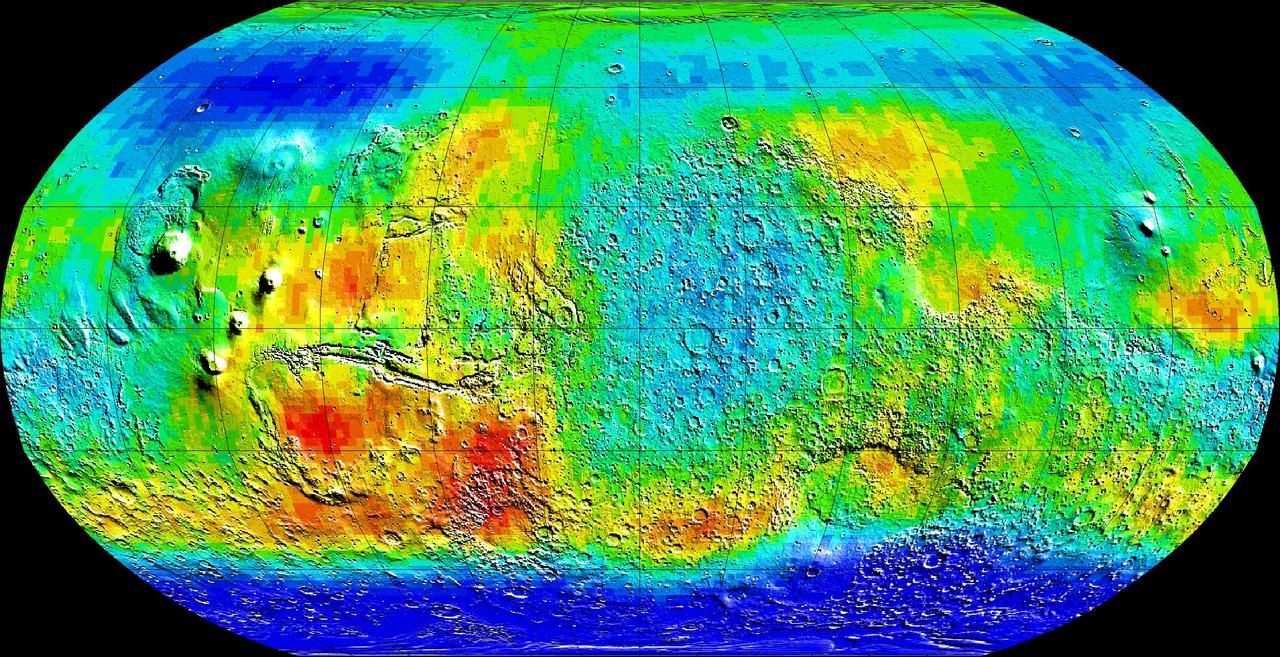
A PhD student at the University of Sydney has produced the first comprehensive classification system and map of Martian soils. The work, led by Daniel Irving of the Sydney Institute of Agriculture and the Faculty of Science, is published in the journal CATENA.
It uses orbital observations and models to classify almost 800 million locations across Mars into a hierarchy of 2,000 soil classes. The map covers 92% of the Martian surface. Irving proposes the term "areths" for Martian soil classes, derived from Ares, the Greek name for Mars.
The Provisional Polythetic Areth Classification System groups soils into 10 major realms, 100 assemblages and 2,000 forms, based on properties including texture, mineralogy, pH and profile thickness.
As a proof of concept, the researchers assessed all 2,000 classes for plant production. One class, Nohibareth, scored 0.93 on the study's zero-to-one scale. Its modelled average profile has a pH of 6.8, 72% clay, minimal sand or gravel and an estimated water-holding capacity of 202 millimetres per metre.
Sourcephys.org