Aurora supercomputer runs two of the largest cosmological simulations yet
Argonne researchers used the Aurora supercomputer to simulate 13.4 trillion dark matter particles in two record-scale runs.
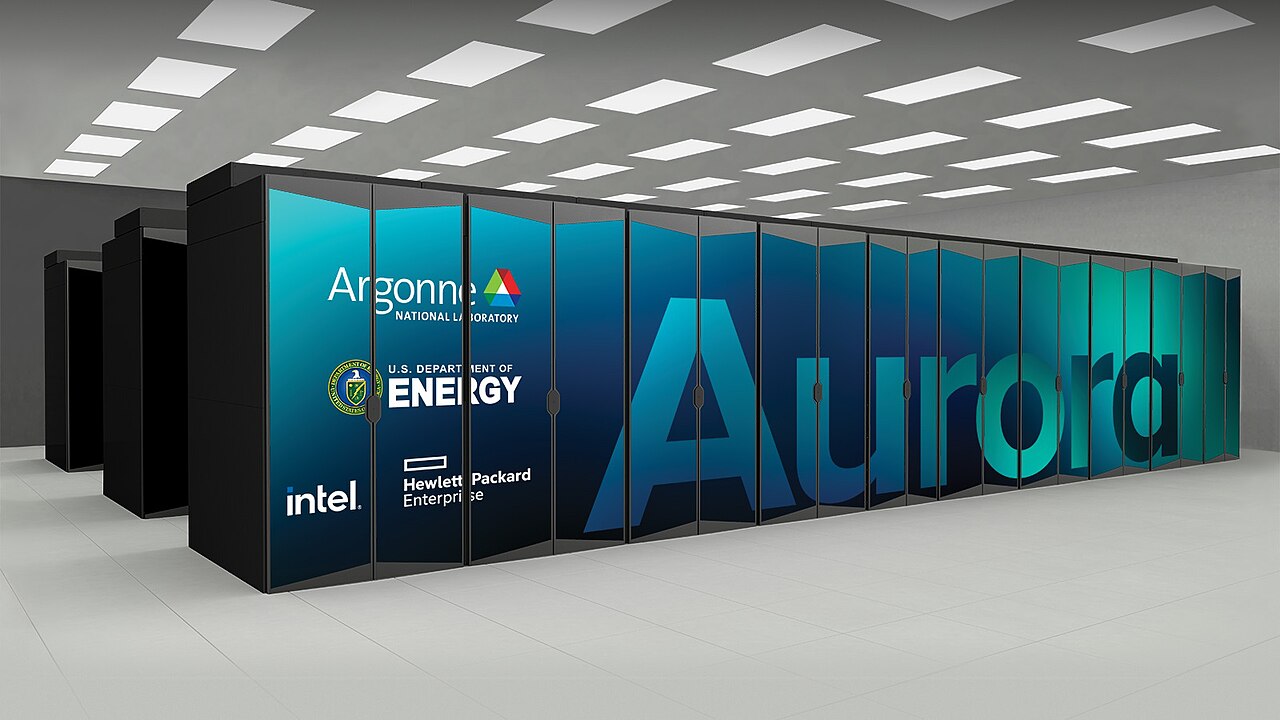
Researchers at Argonne National Laboratory have completed two of the largest cosmological simulations ever performed. Each modelled the evolution of 13.4 trillion dark matter particles across a region 28.6 billion light-years wide.
The calculations ran on Argonne's Aurora exascale machine, which has 10,624 nodes and 63,744 GPUs. Each run drew on 8,100 nodes and roughly 50,000 GPUs. The simulations and much of the data analysis were completed in about four days.
The project is led by Argonne computational scientist Nicholas Frontiere and seeks to shed light on the physics of cosmic inflation. The simulations will aid analysis of major sky surveys, including the Dark Energy Spectroscopic Instrument and NASA's SPHEREx mission, both of which are currently collecting data.
Sourcephys.org