South Korea's Nuri rocket puts 15 satellites in orbit
South Korea's Nuri rocket flew for the fifth time, delivering five NEONSATs and 10 cubesats to orbit.
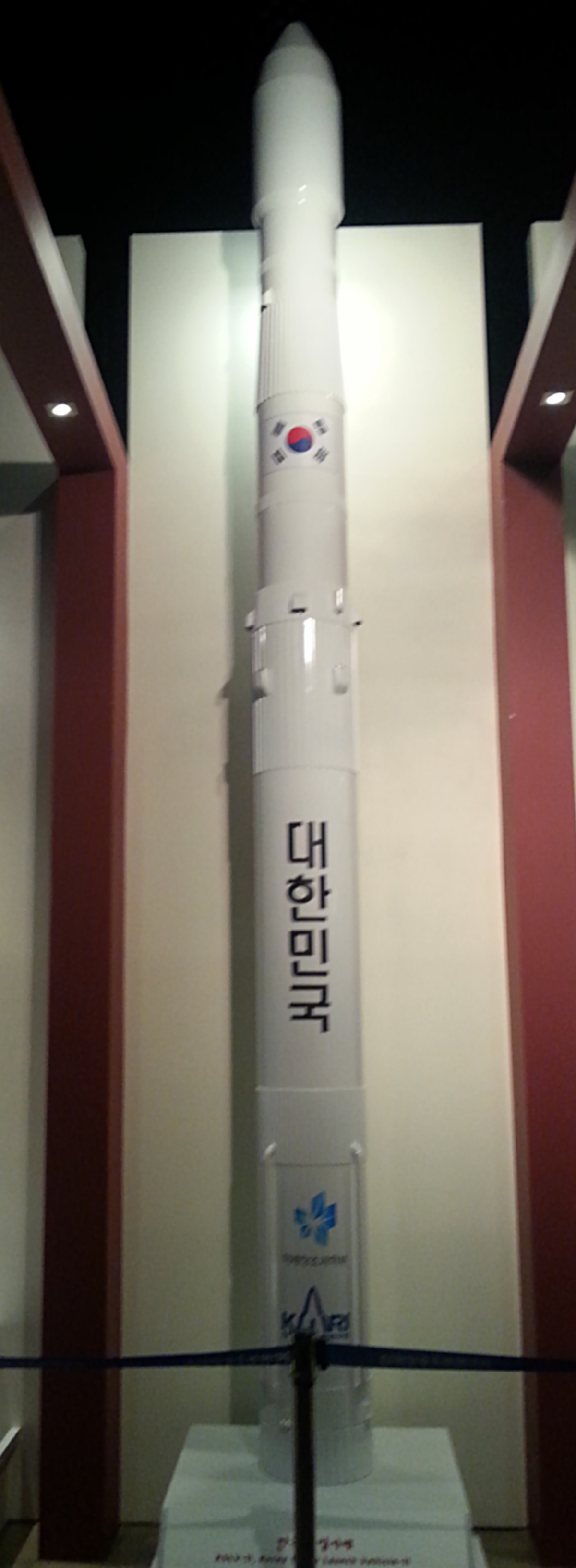
South Korea launched its three-stage Nuri rocket for the fifth time at 11:25 pm EDT on 6 October from the Naro Space Center, on an island off the southern coast of the Korean peninsula. The launch brought 15 satellites to orbit.
Five were NEONSATs developed by the Korea Advanced Institute of Science and Technology, part of the country's planned 10-satellite Earth observation constellation. The other 10 were cubesats from across the Korean space sector, demonstrating space medicine, optical communications and weather observation, and giving a range of locally developed components their first flight heritage.
One cubesat is SD-1Sat, the first satellite from Korean startup Space & Bean. The 3U spacecraft will test whether the company's protective enclosure can shield commercial off-the-shelf components from radiation, thermal stress and vibration. Space & Bean will send down low-volume radiation readings from the enclosure to measure its performance.
SD-1Sat also carries ArbaEdge, a module from ArbaLabs that checks whether the onboard AI model performed as expected. It monitors the model's integrity while it runs, signs its output evidence and produces a verifiable record of what the model did. Its verification data is a maximum of two megabytes. ArbaLabs CEO Ashley Reeves told Payload that space is a "beachhead" for the company, which is working on versions for autonomous vehicles, drones and humanoid robots.
Sourcepayloadspace.com