Milky Way's black hole could be a natural particle accelerator, study finds
A new paper says Sagittarius A* could fling protons to energies a thousand times beyond the Large Hadron Collider.
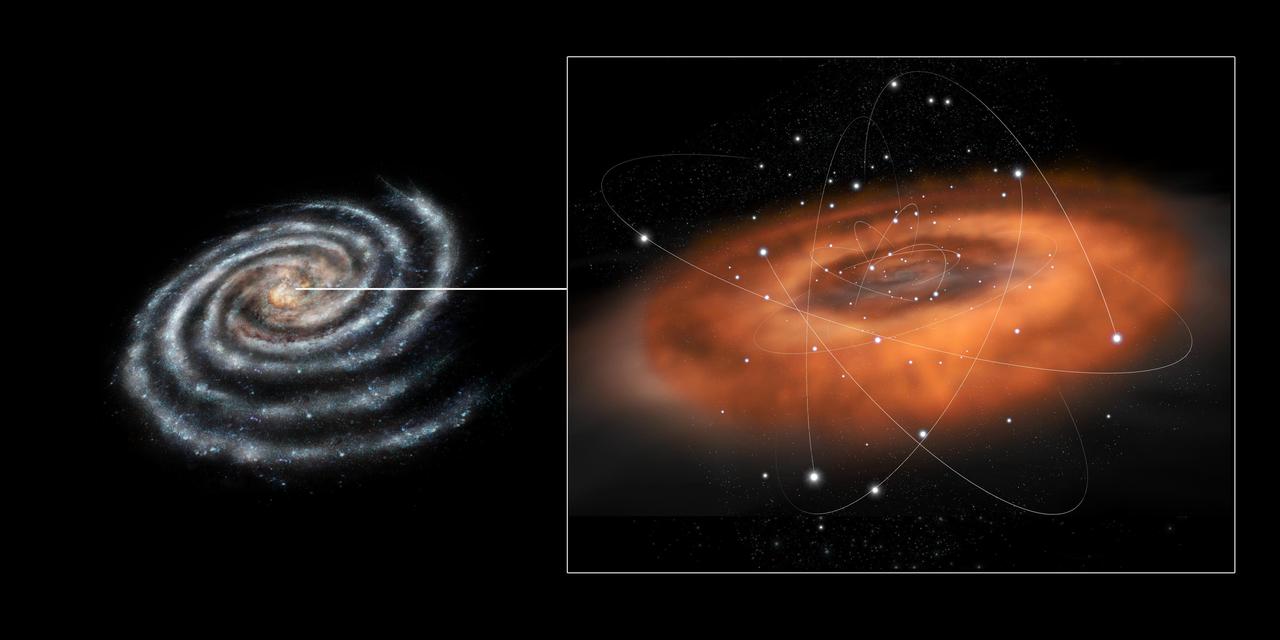
The supermassive black hole at the centre of the Milky Way may be accelerating protons to peta electron volt energies, according to a preprint posted to arXiv by Marina Cermeño and colleagues. If they are right, the signal is detectable, just not yet.
The mechanism is the Penrose process, proposed by Roger Penrose in 1969. A spinning black hole drags space around with it, and close in, inside a region called the ergosphere, nothing can resist that drag. Matter that splits in two there can leave one piece falling in with negative energy while the other escapes with more energy than the original had. The black hole pays for it with a little of its own mass.
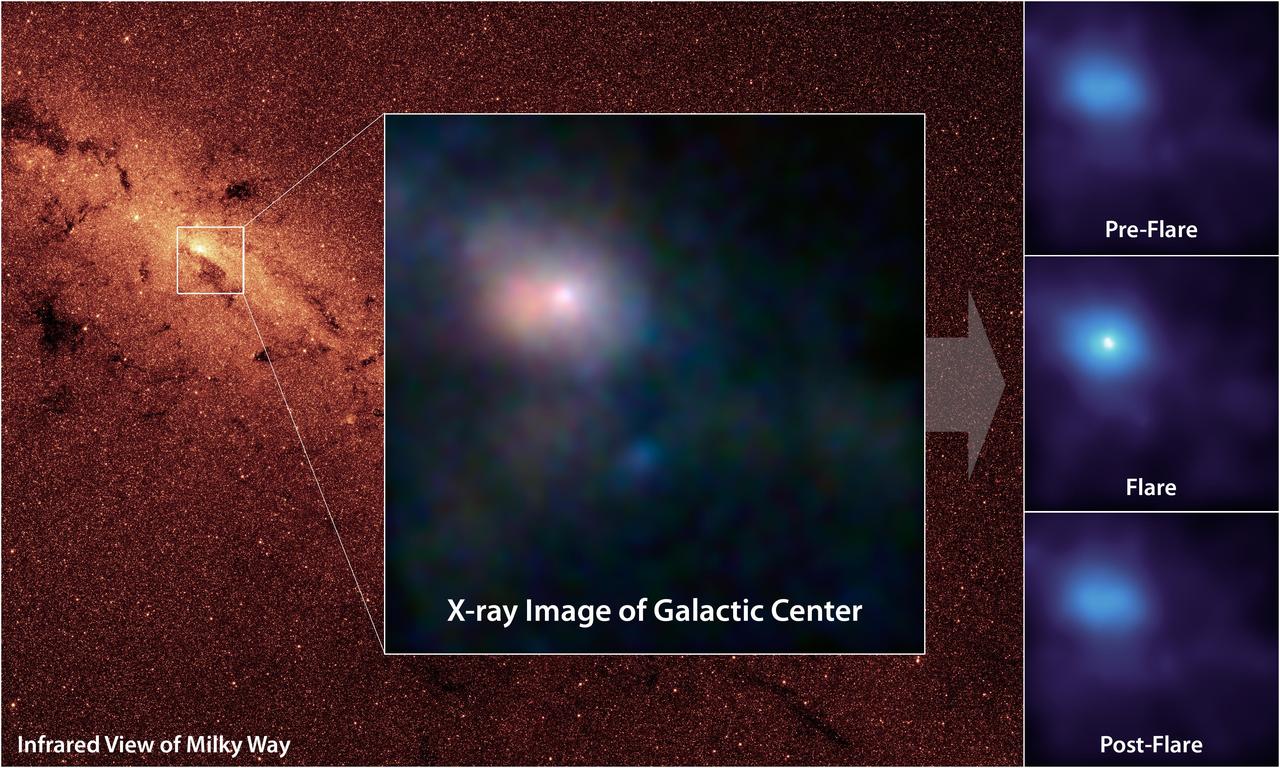
The team applied the magnetic version of the process to neutrons near Sagittarius A*. A neutron decays into a proton, an electron and a neutrino. The charged proton and electron then interact with the magnetic field in the ergosphere, and the paper estimates the protons can leave at PeV energies, roughly a thousand times what the Large Hadron Collider reaches.
Those protons would slam into the gas around the black hole and produce gamma rays with a distinctive spectrum, while the decays would add high energy neutrinos. That pairing of light and neutrinos is a multimessenger signature.
Both signals are too faint for current instruments. The authors point to an upgraded High Altitude Water Cherenkov observatory and the next generation of the IceCube Neutrino Observatory in Antarctica as the facilities that could pick them up. A detection would be the first observed sign of the Penrose process at work, and evidence that a black hole can lose mass.