4 stories
JAXA's MMX mission to launch to Mars's moon Phobos on H3 rocket
JAXA's MMX spacecraft is set to launch on an H3 rocket on 19 October, bound for Phobos. Webb has found a possible supernova, AT 2026abck, about four to 10 days after it exploded. Griffin-1 has completed environmental testing at JPL ahead of a Falcon Heavy launch to the Moon later this year.
- 01LaunchJAXA's MMX mission to launch to Mars's moon Phobos on H3 rocket
- 02ScienceWebb detects possible supernova in early universe days after explosion
- 03LaunchVoyager Technologies' Griffin-1 lunar lander completes testing at NASA JPL
- 04Comms-EOPlanet, IHME and Microsoft launch Populace, a 40-metre global population map
JAXA's MMX mission to launch to Mars's moon Phobos on H3 rocket
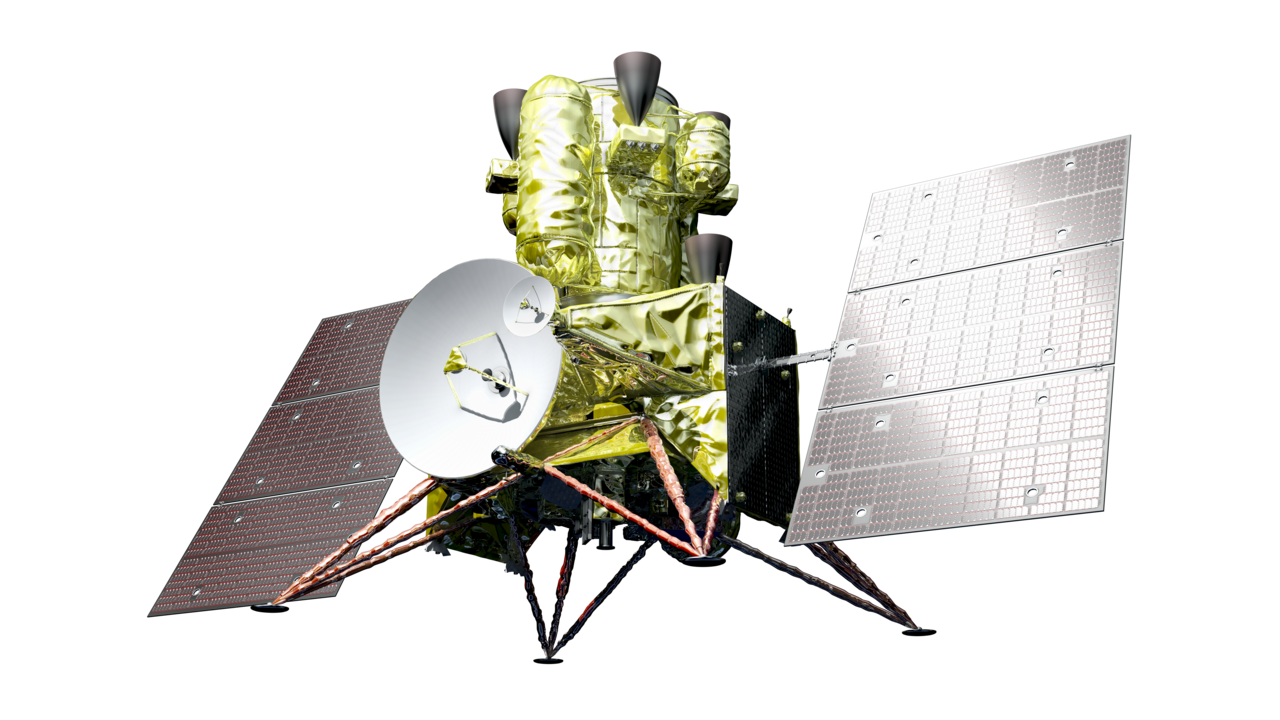

The Martian Moons eXploration (MMX) mission is set to launch on an H3 rocket from the Tanegashima Space Center at 04:41 JST on 20 October 2026. This corresponds to 20:41 BST and 21:41 CEST on 19 October. MMX will be the first mission to collect a sample from Phobos and return it to Earth.
The Japan Aerospace Exploration Agency (JAXA) leads the mission, in collaboration with NASA, the French space agency CNES, the German Aerospace Center (DLR) and the European Space Agency (ESA).
The main spacecraft will study Phobos from a distance, then deploy a rover called Idefix to the surface, before landing to collect samples. On the way home it will fly past and further investigate Deimos and Mars. The mission carries 11 science instruments: seven on the main spacecraft and four on the rover.
The Idefix rover has two main tasks: providing information for the main spacecraft's landing and analysing the composition and texture of the surface. Due to the low gravity on Phobos, it will weigh the equivalent of 15 grams on the surface.
Sourceesa.int
Webb detects possible supernova in early universe days after explosion
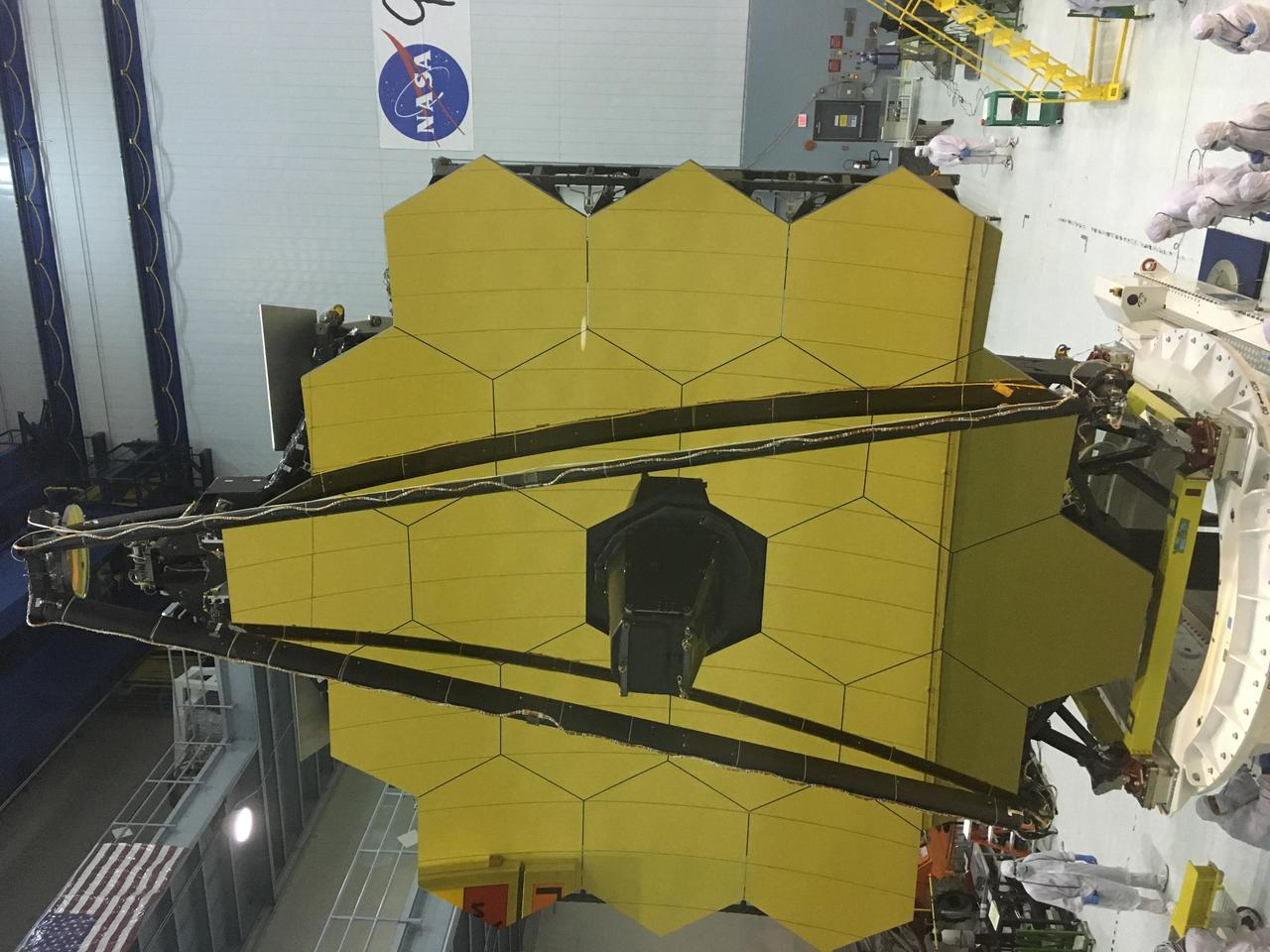
The James Webb Space Telescope has detected a possible supernova in the early universe just days after the star exploded. The transient, called AT 2026abck, lies in a star-forming galaxy at a redshift of 5.017.
Webb observations suggest the event was caught only about four to 10 days after the explosion. It was found without the help of gravitational lensing.
The paper was posted to the arXiv preprint server on 29 September.
Sourcephys.org
Voyager Technologies' Griffin-1 lunar lander completes testing at NASA JPL
.jpg)
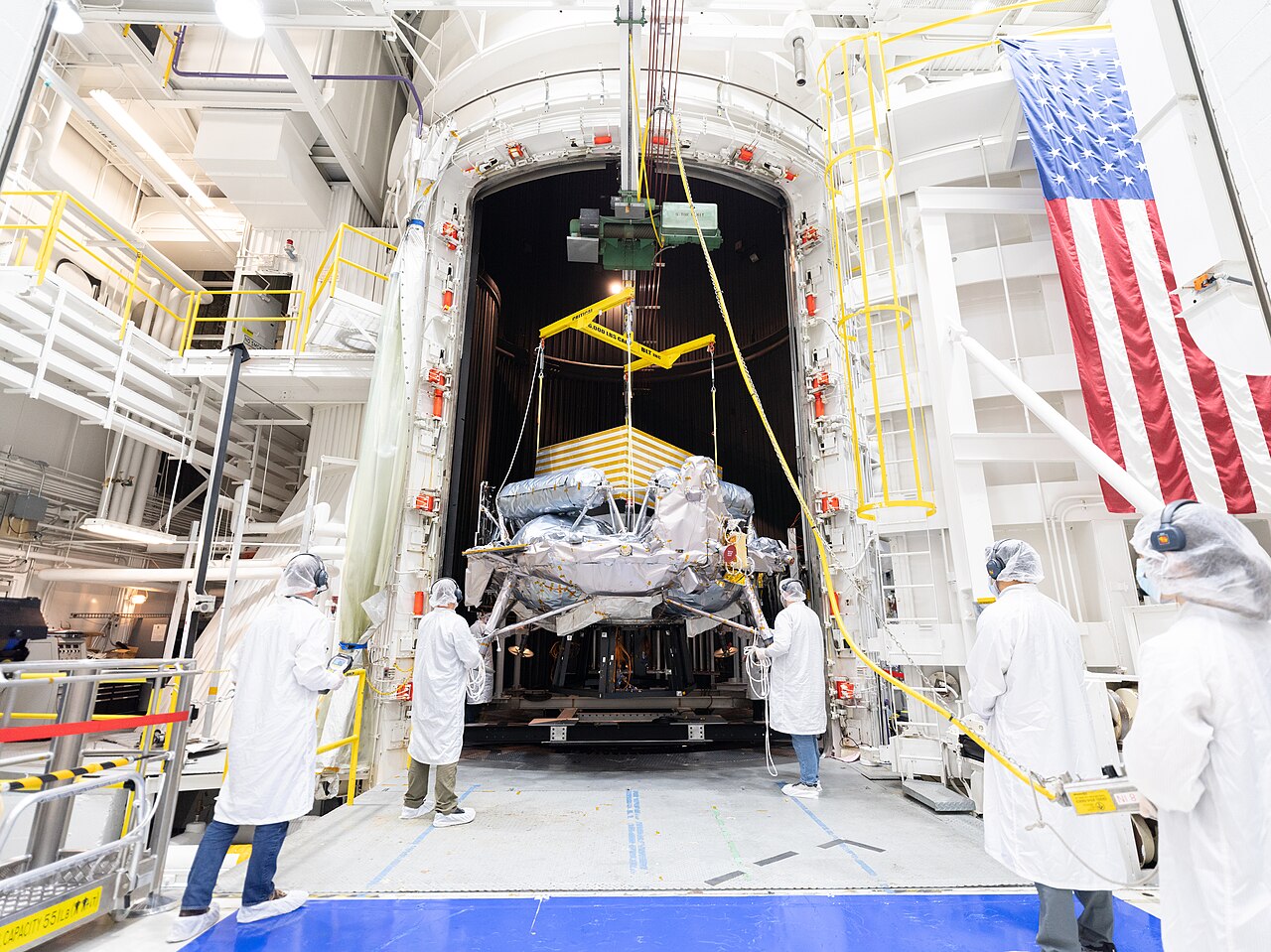
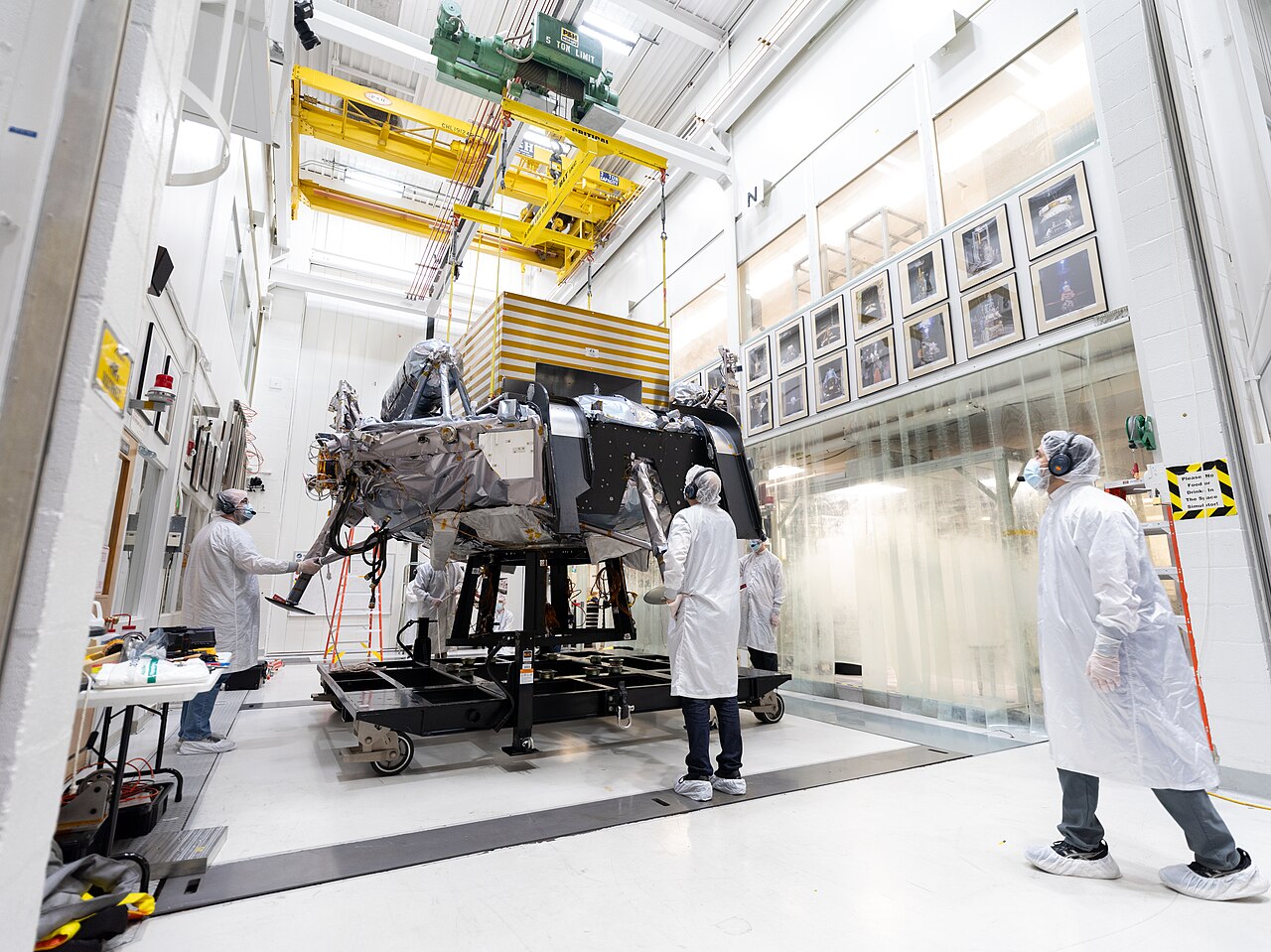
Voyager Technologies' Griffin-1 lunar lander has passed a series of environmental tests at NASA's Jet Propulsion Laboratory in Southern California. Engineers and technicians used a crane to position the spacecraft in JPL's 25-Foot Space Simulator on 31 August.
The tests simulated the extreme temperatures and vacuum of space, as well as the intense shaking and noise of launch. Results show the spacecraft is ready to survive the rigours of space exploration, according to NASA.
.jpg)
Griffin-1 flies under NASA's CLPS (Commercial Lunar Payload Services) initiative within the Moon Base Program. It is expected to launch later this year aboard a SpaceX Falcon Heavy rocket.
The lander will deliver more than 1,100 pounds (455 kilograms) of cargo to Nobile Crater near the lunar South Pole.
Sourcenasa.gov
Planet, IHME and Microsoft launch Populace, a 40-metre global population map
Planet has launched Populace, a continuously updated map of the world's population built with the Institute for Health Metrics and Evaluation (IHME) at the University of Washington and Microsoft's AI for Good Lab. Planet announced the map on 12 October.
Populace combines satellite imagery, machine learning models and outside data to give population density on a 40-metre grid around the entire world. It is updated quarterly. Planet called it the most up-to-date, highest resolution and most accurate population data.
The collaboration began in 2024. Machine learning models from the AI for Good Lab analyse Planet's satellite imagery basemaps to detect human structures. IHME then compares that data against census, survey and administrative data to produce population estimates.
The project aimed to fill gaps where census information is out of date or unavailable in areas where populations are growing quickly. Planet said the data can be used for planning in public health and civil infrastructure, as well as for humanitarian responses and emergency warning.
Sourcesatellitetoday.com