5 stories
ALTEC and ispace-EUROPE sign lunar rover testing agreement
ALTEC and ispace-EUROPE signed an agreement on lunar rover testing, simulation and operator training. Webb imaged the NGC 7129 stellar nursery and a galaxy cluster, while Hubble imaged an out-of-sync galaxy and a nebula. A new arXiv paper reports 3D simulations of Ellis-Bronnikov wormhole pairs, finding only opposite-signed pairs merge.
- 01BusinessALTEC and ispace-EUROPE sign lunar rover testing agreement
- 02ScienceWebb and Hubble release images of a stellar nursery, a galaxy cluster and a nebula
- 03SciencePaper reports first 3D numerical-relativity simulations of wormhole binaries
- 04ScienceALMA catches a dying star mid-transformation
- 05ScienceStudy shortens timeline for the end of some outer planets to about 1 billion years
ALTEC and ispace-EUROPE sign lunar rover testing agreement
ALTEC and ispace-EUROPE have signed a Memorandum of Understanding to explore joint work on lunar rover testing, simulation of mission operations and training of operators. The signing took place at the 77th International Astronautical Congress in Antalya, Turkey.
ALTEC is partly owned by the Italian Space Agency (ASI) and Thales Alenia Space. ispace-EUROPE is the European company of the Japanese ispace group. Vincenzo Giorgio, ALTEC's chief executive, and Julien-Alexandre Lamamy, chief executive of ispace-EUROPE, signed the memorandum.
The collaboration may involve the Lunar Simulation Centre in Turin, which ALTEC developed with funding from ASI.
Sourceasi.it
Webb and Hubble release images of a stellar nursery, a galaxy cluster and a nebula
_(1450401).png)
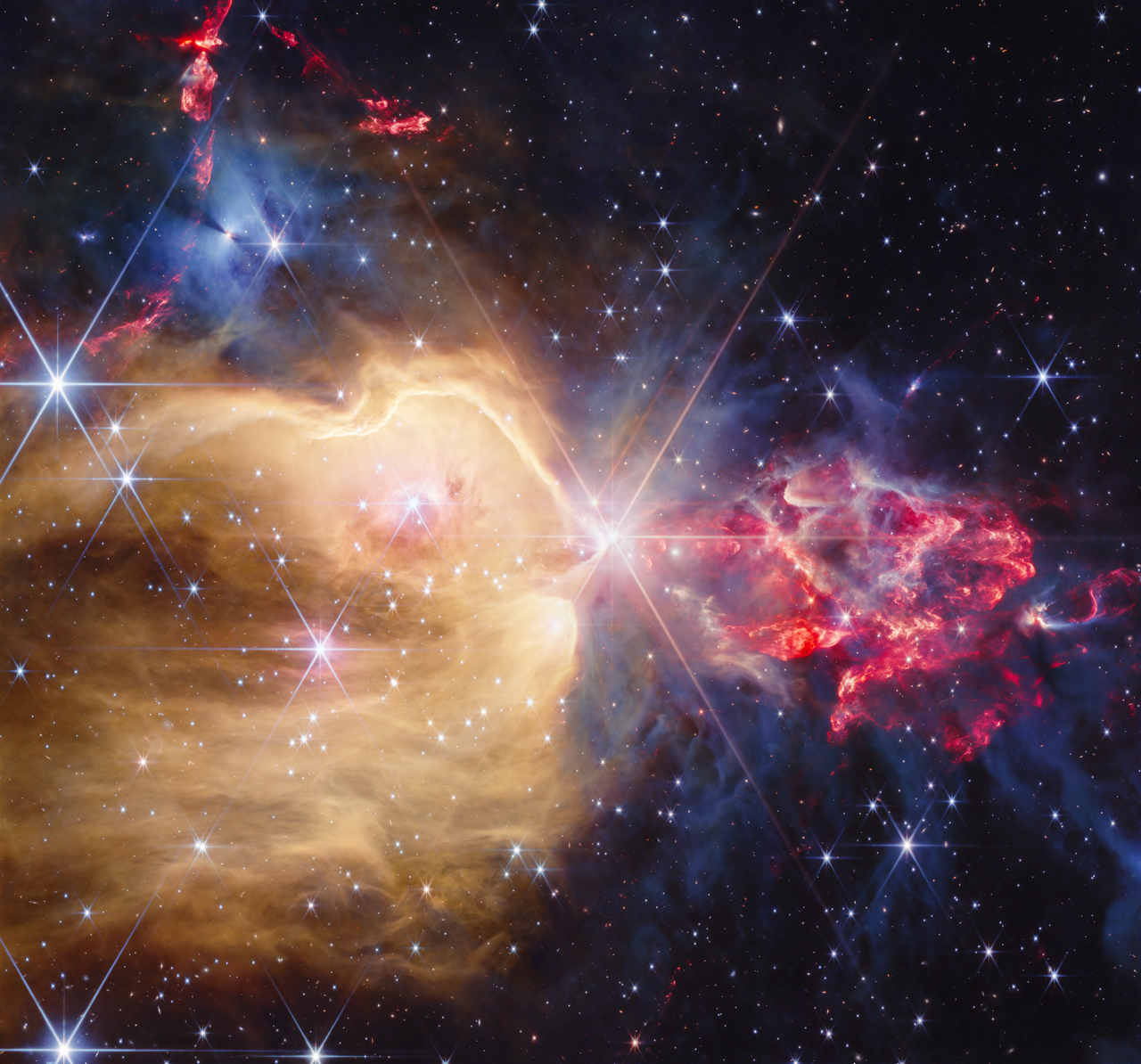
Teams using the James Webb Space Telescope and the Hubble Space Telescope have released several new images. Webb's show a stellar nursery and a galaxy cluster. Hubble's show an out-of-sync galaxy and a bubble-like nebula. Both telescopes are jointly operated by NASA and the European Space Agency, and the Canadian Space Agency also participates in Webb.
The Webb image of the stellar nursery NGC 7129 covers a region 3,300 light-years from Earth. Its dust clouds help start the formation of stars but also block the light from young stars at optical wavelengths. Webb's infrared sensitivity lets its instruments see through the dust and reveal hundreds of stars at different stages of their lives.
The most massive star in NGC 7129 is LkHα 234, at the centre of the region. It is five to eight times more massive than the Sun, and it is a pre-main-sequence star that has gathered all the mass it needs and is contracting under its own gravity.
Sourcenasaspaceflight.com
Paper reports first 3D numerical-relativity simulations of wormhole binaries
A paper posted to arXiv on 9 October 2026 reports what its authors say are the first 3D numerical-relativity evolutions of wormhole binaries. The study, by Nikita M. Shirokov and one co-author, models pairs of massive Ellis-Bronnikov drainholes held open by a ghost scalar field.
Each throat is an unstable fixed point, and its e-fold time matches the González-Guzmán-Sarbach linear rate to within 1.9%. Two throats follow a charge-sign rule: like scalar charges repel and opposite charges attract. The measured attraction-to-repulsion ratio is 1.462±0.022, against a predicted 3/2, so only opposite-signed pairs merge.
In a head-on collision, a common marginally outer trapped surface forms around both still-open throats with about their combined area. The horizon then loses 28% of its area as it swallows the phantom field. By t=100 it lies within 1.4% of the Schwarzschild radius of the pair's mass and is still shrinking. Fly-by pairs form no horizon, and both mouths inflate.
The authors report that every encounter radiates a burst of gravitational waves and a scalar dipole of comparable energy and negative sign. A throat survives at most a few orbital periods for any plausible perturbation, and the negative-energy dipole would pump the orbit rather than drain it, so these binaries have no inspiral.
Sourcearxiv.org
ALMA catches a dying star mid-transformation
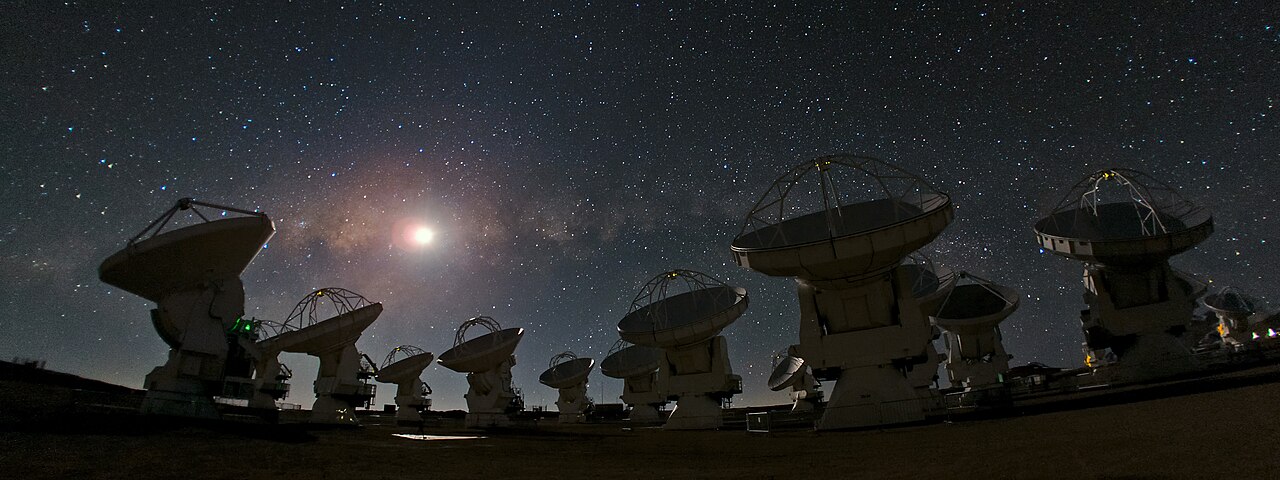

Astronomers have used radio observations from the Atacama Large Millimeter/submillimeter Array (ALMA) to catch a dying star in the middle of a dramatic transformation. The data show a ring that records the star's final outburst.
The research was posted to the arXiv preprint server on 18 September. The paper has been accepted for publication in The Astrophysical Journal.
Sourcephys.org
Study shortens timeline for the end of some outer planets to about 1 billion years
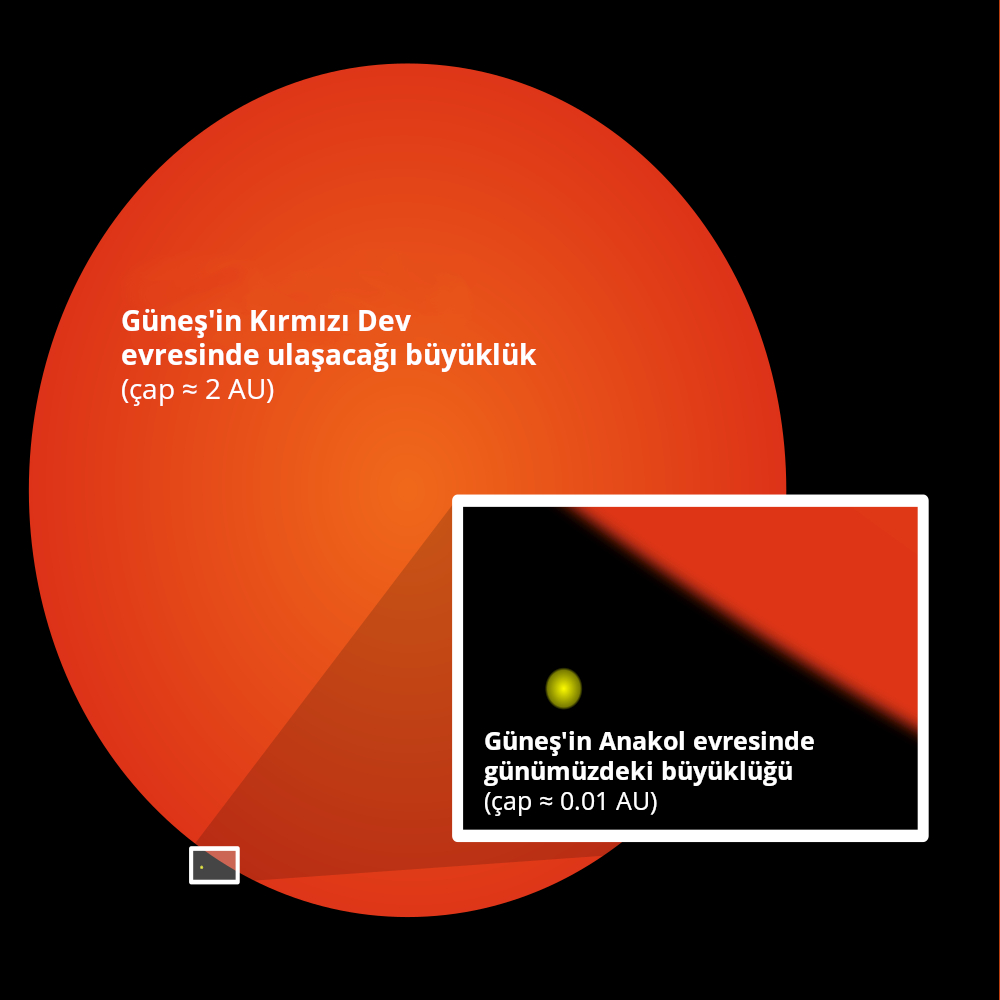

New research published in The Astrophysical Journal Letters suggests the final curtain for some of the outer planets will arrive much sooner than previously thought. The study shrinks the timeline from a quintillion years to roughly 1 billion years.
Estimates of how the end of the solar system will look vary widely, once the Sun sheds much of its mass and ultimately dies.


Sourcephys.org