4 stories
Blue Origin rebuilds LC-36 for New Glenn return before year-end
Four months after the New Glenn pad explosion, Blue Origin is repairing LC-36 with a vertical integration approach. A reanalysis of archival data revealed PSR J0103-72, the slowest radio pulsar in the Small Magellanic Cloud. SpaceX's Michael Nicolls told the International Astronautical Congress that all operators must share satellite trajectory data.
- 01LaunchBlue Origin rebuilds LC-36 for New Glenn return before year-end
- 02ScienceSlowest Radio Pulsar Found in Small Magellanic Cloud
- 03Comms-EOSpaceX executive urges satellite operators to share orbital data
- 04InfrastructureHonda and Redwire to develop robotic lab support system for space stations
Blue Origin rebuilds LC-36 for New Glenn return before year-end
.jpg)
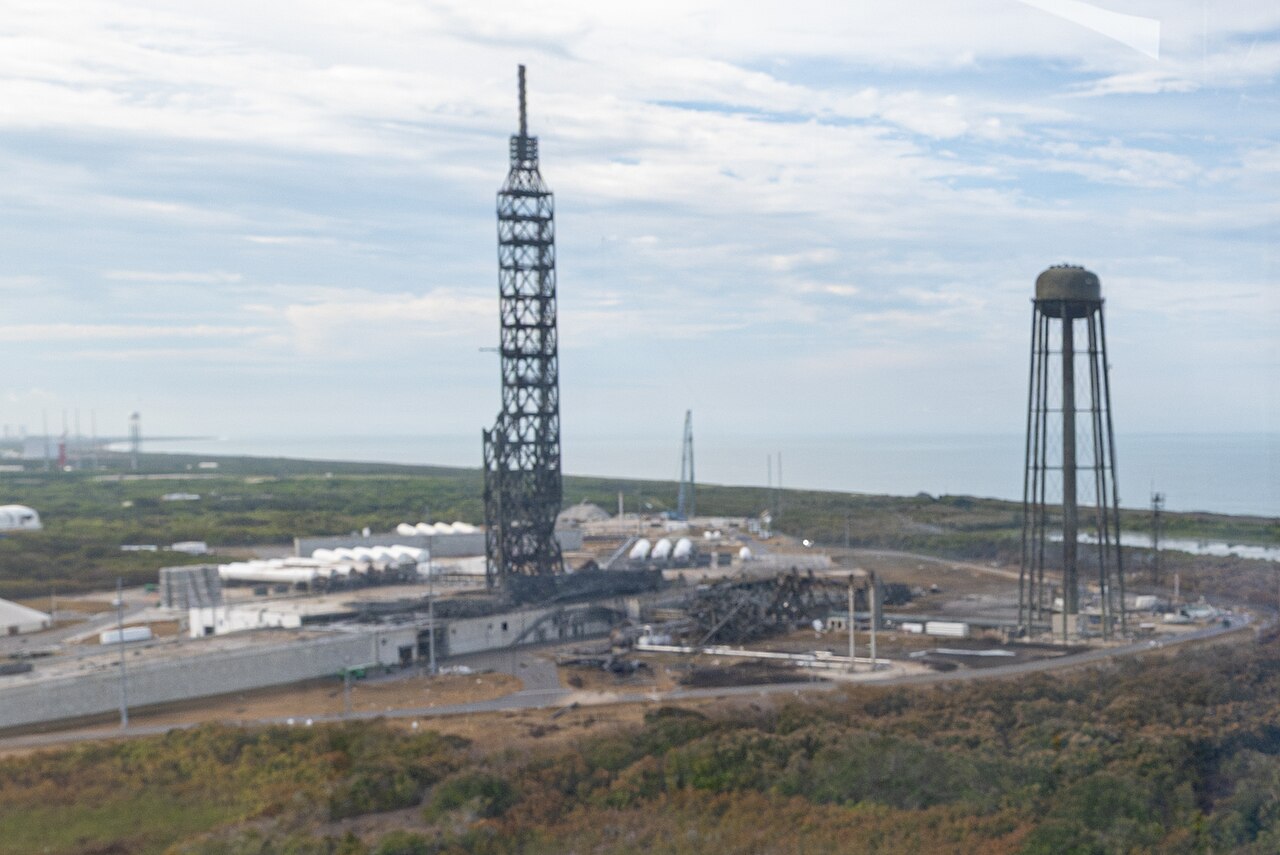
Four months after a New Glenn rocket exploded on the launch pad, Blue Origin is targeting a return to flight before the end of the year. With about three months left, attention is on whether the rebuild of Launch Complex-36 (LC-36) is nearing the halfway mark.
The blast toppled the pad's lightning tower and bent beams in the support tower. Blue Origin also lost its large transporter-erector, which had supplied propellants and other commodities to the vehicle.
To speed up the return to flight, the company moved from horizontal to vertical integration. It is dropping the transporter-erector and relying only on the support tower, an approach that mirrors SpaceX's Starship operations. This change requires repairs and upgrades to the support tower so it can move super-cold cryogenic propellant from the tank farm to the vehicle.
CEO Dave Limp said the fastest method was to destack most of the modules, repair and upgrade them on the ground in parallel, then reassemble the tower. Teams have worked on this since the summer, adding new floors, guard rails for worker access, and the ground support equipment needed to carry propellant up the tower. That phase is now wrapping up.
Sourcenasaspaceflight.com
Slowest Radio Pulsar Found in Small Magellanic Cloud
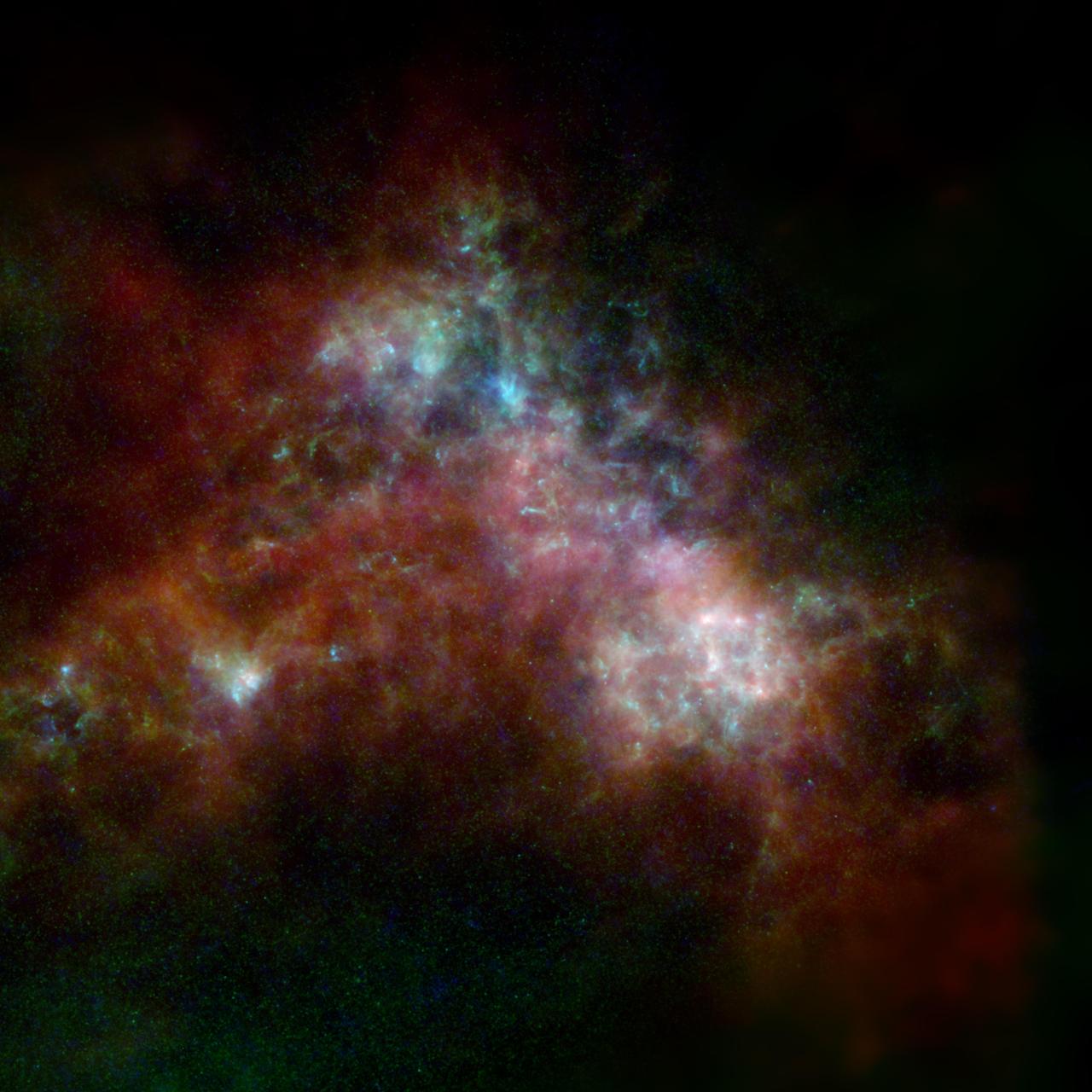
A new radio pulsar, PSR J0103-72, has been discovered in the Small Magellanic Cloud through a reanalysis of archival Parkes/Murriyang observations. The discovery, detailed in a paper by Weiyu Wang and Rahul Sengar, was submitted to arXiv on 8 October 2026.
PSR J0103-72 has a spin period of 1.327 seconds, making it the slowest known radio pulsar in the Small Magellanic Cloud. Its dispersion measure is 272 ± 13 pc cm⁻³, the second highest known there. After subtracting the predicted Galactic foreground, the remaining dispersion measure contribution is approximately 230 to 242 pc cm⁻³. This may indicate a long path through the ionised medium of the Small Magellanic Cloud, enhanced ionised gas along the sightline, or both.
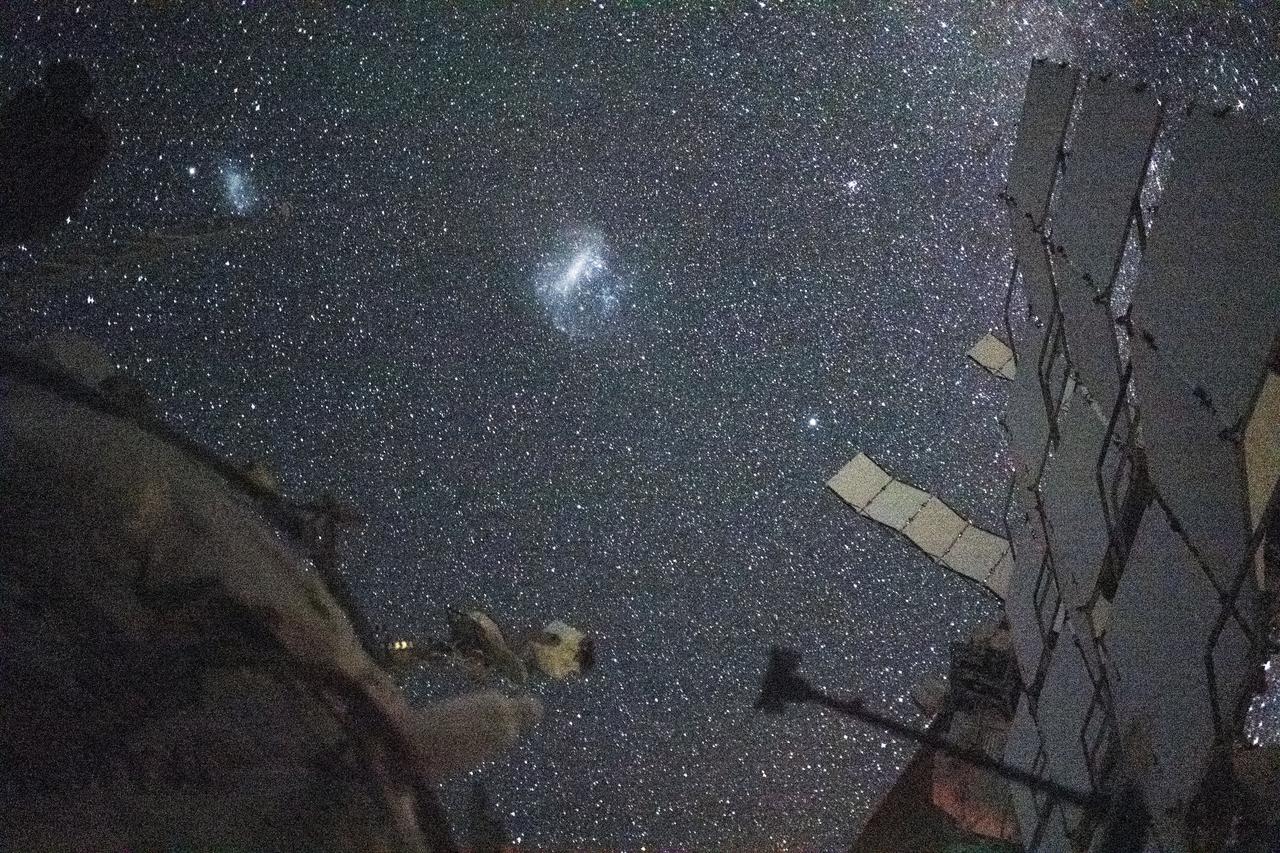
The observations originally targeted supernova remnants and pulsar-wind nebulae in the Small Magellanic Cloud. Two pulsars had previously been identified in these data, and PSR J0103-72 is the third, independently detected in two observations of its target field. No plausible supernova remnant or pulsar-wind nebula was found to be associated with the pulsar.
Although the data had been searched using both FFT and fast folding algorithms before, the new FFT-based reprocessing identified PSR J0103-72 from a candidate with weak Fourier-domain significance. This suggests that such candidates can reveal faint, narrow-duty-cycle pulsars that were missed in earlier extragalactic searches.
Sourcearxiv.org
SpaceX executive urges satellite operators to share orbital data
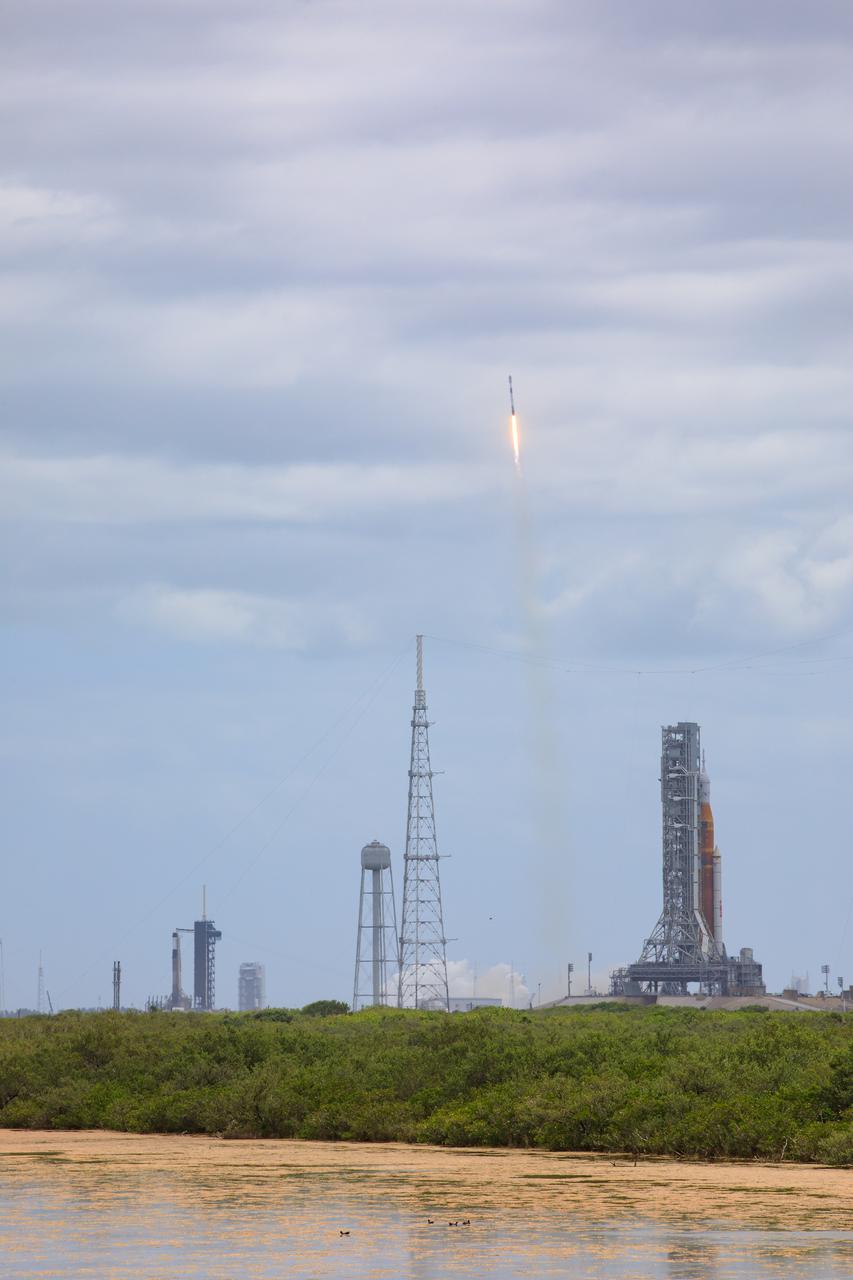
Michael Nicolls, SpaceX's vice president for Starlink, has called for better data-sharing among satellite operators. He spoke in a presentation at the International Astronautical Congress in Turkey, following near-misses involving Starlink satellites. His message was that space has room for more megaconstellations only if all operators share where their satellites are and where they are going.
Starlink now has more than 11,000 satellites, about two-thirds of all active spacecraft in low-Earth orbit. Radars and telescopes routinely track thousands more pieces of space junk. SpaceX has revealed plans to launch up to a million satellites for a new constellation called Starmind. Amazon is in the early stages of launching a network of thousands of satellites, and two Chinese megaconstellations are in full-scale deployment.
A collision in orbit could create thousands more pieces of space junk and potentially set off a self-perpetuating cycle of debris generation. The risk on any given day is very low, and SpaceX and most other Western operators de-orbit their rockets and satellites at the end of their missions. "The law of large numbers says that if it can happen, it will happen," Nicolls said.
Sourcearstechnica.com
Honda and Redwire to develop robotic lab support system for space stations
Honda is teaming up with space infrastructure firm Redwire to develop an automated laboratory support system for future commercial space stations.
Redwire is providing a reaching and motion platform called the Space Technology Autonomous Agile Robotic Kit, or STAARK. It is designed to autonomously interact with and grab dynamic objects. Redwire manages eight operational science facilities on the International Space Station.
The system is aimed at routine tasks such as scanning barcodes for inventory management and swapping biological sample trays, which astronauts now handle themselves. NASA plans to deorbit the space station around 2030. Private operators including Axiom Space and Vast, and the Orbital Reef project, hope to launch stations of their own. Many of these will be smaller at first, with crews of two or four, and some will go long stretches without a crew aboard.
Sourceuniversetoday.com