5 stories
NASA issues call for private space stations to succeed ISS
NASA has asked US companies to propose private stations to replace the ISS, with responses due 8 December. Seattle startup Kapta Space has raised $24M to produce radar payloads for classified moving target missions. Follow-up spectroscopy placed radio galaxy TXS 2354+015 at redshift 4.946, nearly 12.5 billion years in the past.
- 01PolicyNASA issues call for private space stations to succeed ISS
- 02BusinessKapta Space raises $24M Series A for moving target radar payloads
- 03ScienceAstronomers confirm powerful radio galaxy from nearly 12.5 billion years ago
- 04BusinessAstrogate Labs and Spacebeam Partner on Optical Links
- 05LaunchChina Launches 27th Batch of SatNet Satellites
NASA issues call for private space stations to succeed ISS
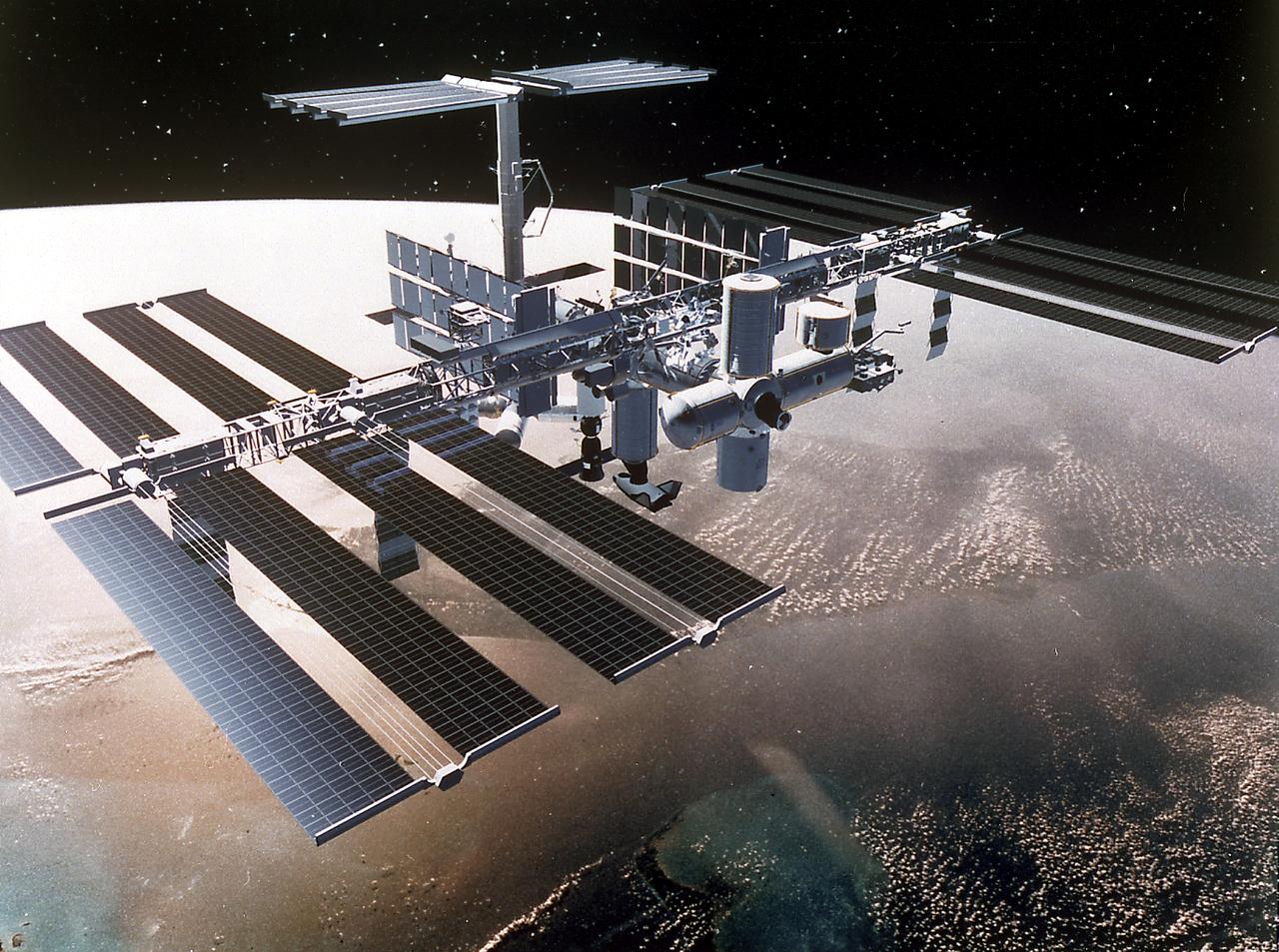
NASA has released a request for proposals asking the US commercial space industry to develop private space stations where astronauts can live in low-Earth orbit as early as 2030. The new stations are intended to succeed the International Space Station.
Industry responses are due on 8 December. NASA plans to select "two or more" contractors in this phase of the Commercial LEO Destinations competition, with a final decision expected in April. Phase 1 winners are guaranteed at least $100 million.
NASA said Phase 2 will begin next year and include funding for the development and certification of space stations. Phase 3 will include the purchase of at least four missions for NASA astronauts.
NASA Administrator Jared Isaacman said: "We've made it clear that NASA will never give up its presence in low Earth orbit." He added that NASA will continue to need a place to conduct research, develop technologies, train crews and prepare for missions to the Moon and Mars.
Sourcearstechnica.com
Kapta Space raises $24M Series A for moving target radar payloads
Seattle-based Kapta Space announced a $24M Series A on 9 October, bringing its total financing to $30M since its founding in 2022. Washington Harbour Partners and Bison Ventures led the round, with participation from MetaVC Partners, MYDA Advisors, Entrada Ventures, Aurelia Foundry and Fitz Gate Ventures.
The capital will fund production of Kapta's low-cost moving target indication (MTI) radar payloads for classified MTI missions secured this year. CEO Milton Perque told Payload the company is executing two high-profile demo missions that will lead to highly proliferated MTI missions, with flight heritage expected in the next 24 to 36 months.
Kapta's radar uses a new approach to electronic steering. It is expected to offer a wide view while maintaining custody of a moving target across land, air and sea, at significantly lower cost, power and complexity than active electronically scanned arrays. The company expects it to track missiles in the mid-course phase.
The radar is also modular, allowing a scaled-down version to offer SAR capabilities to satellite operators seeking simpler radar in a smaller form factor. Perque said Kapta's program predates and "transcends" the proposed Golden Dome missile-defence shield.
Sourcepayloadspace.com
Astronomers confirm powerful radio galaxy from nearly 12.5 billion years ago
Astronomers have confirmed a powerful radio galaxy from nearly 12.5 billion years ago. The source, TXS 2354+015, was first identified as a high-redshift candidate from a characteristic drop in its optical light. Follow-up spectroscopy placed it at a redshift of 4.946. The paper was posted to the arXiv preprint server on 23 September.
The team, led by Barbara Balmaverde of the INAF Astrophysical Observatory of Turin, combined deep optical imaging from the Subaru Hyper Suprime-Cam Subaru Strategic Program survey with radio catalogues including TGSS at 150 MHz and VLASS at 3 GHz. They searched for radio sources whose optical counterparts showed the Lyman-break dropout feature between redshifts of 4.5 and 5.3, when the universe was 1.1 billion to 1.3 billion years old.
TXS 2354+015 showed a prominent Lyman-alpha emission line in its optical spectrum. The team verified the redshift using a second, fainter emission line.
This approach was chosen because the dominant method of hunting radio sources, which looks for unusually steep spectra, appears to miss a large part of the population. A 2024 study suggests as many as 90% of such sources at redshifts above 3.5 might be hidden in the ultraviolet and optical bands.
Sourcephys.org
Astrogate Labs and Spacebeam Partner on Optical Links
India's Astrogate Labs and South Korea-based Spacebeam have signed a Memorandum of Understanding to demonstrate laser communications, including optical ground stations. The companies announced the agreement on 9 October 2026 during the International Astronautical Congress (IAC) in Antalya, Turkey.
The partnership combines Astrogate's AstroLink optical communication terminals for satellites with Spacebeam's Osong optical ground station infrastructure.
The companies plan to begin with terrestrial and air-to-ground testing, then move to space-to-ground demonstrations using a satellite equipped with an Astrogate terminal. They also plan to explore an end-to-end service for customers that includes both the terminal and the downlink technology.
Nitish K. Singh, founder and CEO of Astrogate Labs, stated that the value of optical communications is realised when the space and ground segments work together as one end-to-end link.
Sourcesatellitetoday.com
China Launches 27th Batch of SatNet Satellites
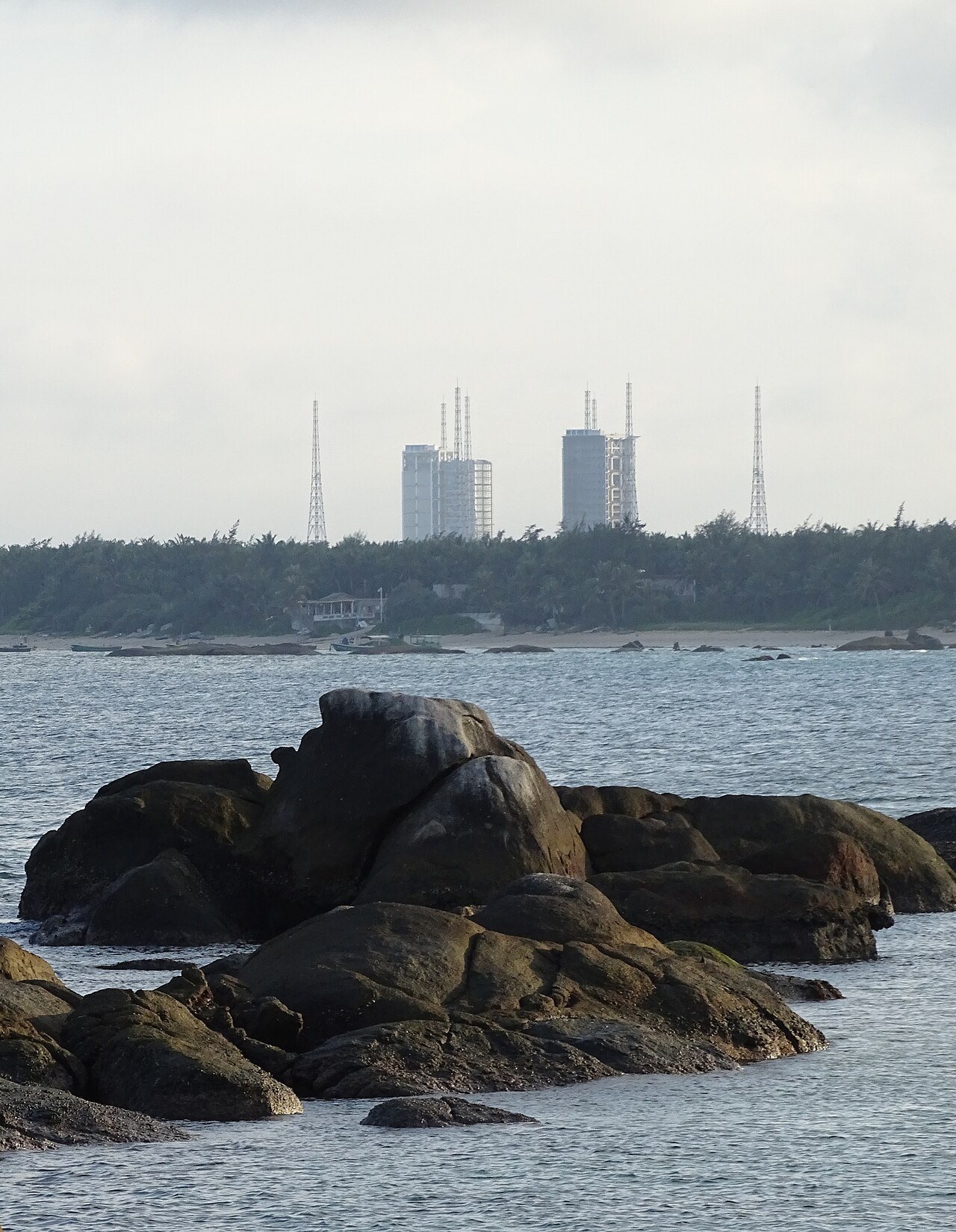

China has launched the 27th batch of SatNet communications satellites into low-Earth orbit, the China Aerospace Science and Technology Corporation (CASC) reported. The Long March-12 rocket lifted off at 3:27 a.m. Beijing time on Saturday, 10 October (7:27 p.m. GMT the evening before).
The launch was from the commercial launch site at the Wenchang Space Launch Site in Hainan Province, southern China. CASC announced it in a post on its official WeChat account.
The Long March-12 is a two-stage, liquid-propellant rocket with a liftoff thrust of 5,000 kilonewtons. It is 62 metres long, with a payload fairing diameter of either 5.2 or 4.2 metres. It can carry at least six metric tonnes into a sun-synchronous orbit at an altitude of 700 kilometres.
This was the rocket's ninth launch and its fifth this year.
Sourcetass.com