5 stories
Francis Halzen wins the 2026 Nobel Prize in Physics for IceCube neutrino work
Francis Halzen is the first sole winner of the physics prize since 1992, honoured for founding the IceCube Neutrino Observatory at the South Pole. Kratos says multiple contracts worth over $100 million combined will fund space and cyber work built on its KnownSpace Network. Open Cosmos aims for more than 96 ConnectedCosmos satellites in orbit by end of 2028 and global coverage by 2030.
- 01ScienceFrancis Halzen wins the 2026 Nobel Prize in Physics for IceCube neutrino work
- 02ContractsKratos reports over $100 million in space and cyber contracts
- 03Comms-EOOpen Cosmos targets 192 satellites for ConnectedCosmos LEO constellation
- 04ContractsYork Space Systems clears design review for Space Force Tetra 3 and 4 missions
- 05BusinessHawkEye 360 demonstrates RF detection of satellites from orbit
Francis Halzen wins the 2026 Nobel Prize in Physics for IceCube neutrino work
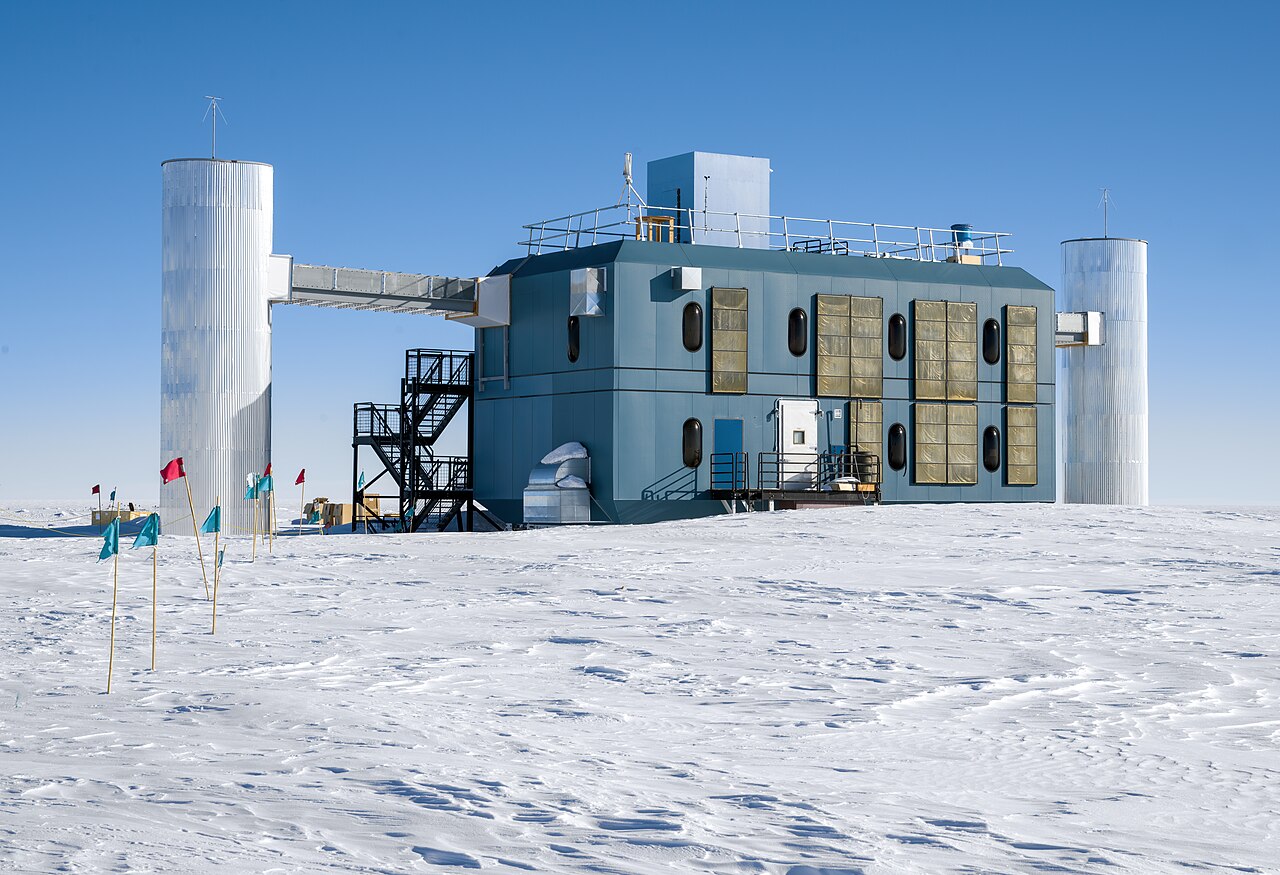

Belgian-born physicist Francis Halzen has won the 2026 Nobel Prize in Physics for his work detecting high-energy neutrinos that come from deep in space. The Royal Swedish Academy of Sciences announced the award in Stockholm on 6 October.
Halzen, who is based at the University of Wisconsin-Madison, founded the IceCube Neutrino Observatory, a giant detector at the South Pole. Its results helped establish neutrino astronomy and multimessenger astronomy, which study the most energetic events in the Universe.
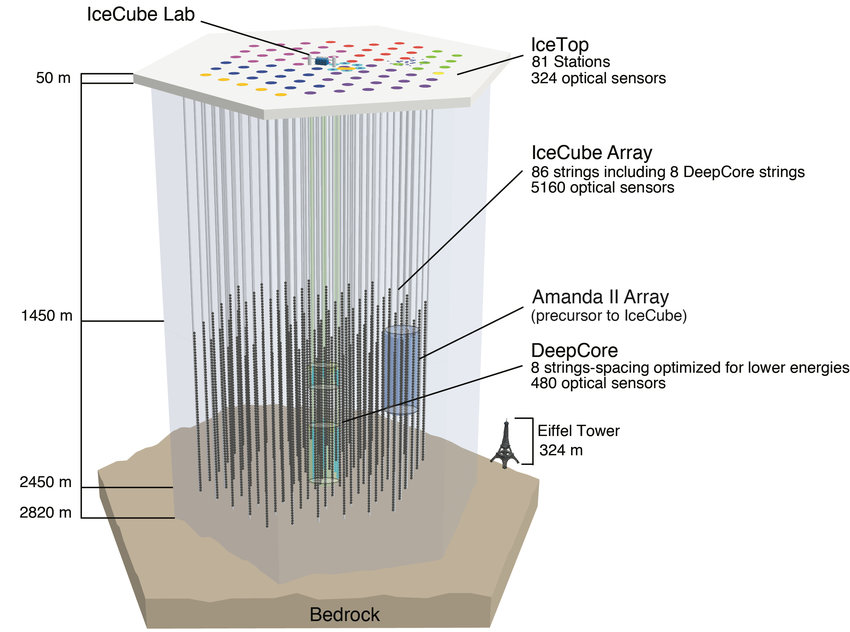

He takes the full 12 million Swedish kronor (about US$1.2 million) prize. It is the first time since 1992 that the physics prize has gone to a single winner.
Because neutrinos pass straight through matter, they point back in a straight line to where they came from, such as supernovae and gamma-ray bursts. "It was a great surprise and I obviously didn't expect it," Halzen told the Nobel press conference.
Sourcenature.comtass.com
Kratos reports over $100 million in space and cyber contracts
Kratos Defense & Security Solutions has received multiple contracts worth more than $100 million combined for space and cyber capabilities that provide space intelligence data. The work will draw on the company's radio frequency (RF) collection infrastructure, the KnownSpace Network. Kratos did not share the specific contracts.
The company said it will develop prototype mission applications and cyber capabilities to support electronic warfare and offensive cyber operations. "Work under the contracts will provide warfighters with capabilities to collect and process complex radio frequency (RF) signals, develop intelligence on the operational environment and support the joint targeting cycle," Kratos said in a statement.
The work will also include KnownSpace Recon+, Kratos' field-portable space domain awareness terminals, along with software products, analytics and expertise in RF, signal processing, cybersecurity and software development. The KnownSpace family of products focuses on detecting, characterising and understanding satellite and terrestrial activity.
Sourcesatellitetoday.com
Open Cosmos targets 192 satellites for ConnectedCosmos LEO constellation
Open Cosmos is targeting 192 satellites for its ConnectedCosmos low-Earth orbit constellation. The company is building toward more than 96 satellites in orbit by the end of 2028, on a path to full global coverage by 2030. It revealed more details of the plan on 5 October.
The next launch of ConnectedCosmos satellites will likely take place before the end of this year. Open Cosmos revealed the constellation in January and quickly launched the first two demonstration satellites. It is designed to provide high security communications to government and enterprise customers.
The announcement follows a funding round of more than 300 million euros. The money will extend the company's satellite mass-manufacturing capabilities and speed up the delivery of intelligence and connectivity services by expanding ConnectedCosmos, the OpenConstellation and the DataCosmos platform.
"The 192 satellites are the foundation, not the ceiling," said Rafel Jordà Siquier, founder and CEO of Open Cosmos. "When customers and partner nations need more capacity, we can deliver it quickly."
Sourcesatellitetoday.com
York Space Systems clears design review for Space Force Tetra 3 and 4 missions
York Space Systems has cleared the delta critical design review for the U.S. Space Force Tetra 3 and Tetra 4 missions, where it is prime contractor. The company announced the milestone on 5 October. It will now build the spacecraft and expects delivery in the fourth quarter of this year.
The spacecraft is headed to geostationary orbit, the first time York has integrated a satellite for GEO. The missions will perform in-orbit threat presentation, independent range data collection, small satellite technology risk reduction and experimental payload hosting.
York is integrating a long wave infrared camera, a LiDAR sensor and a GEO-qualified GPS side lobe receiver. The company said it made a late-stage design change for a new propulsion system required for the mission, with no structural, thermal or power impacts to the vehicle.
Sourcesatellitetoday.com
HawkEye 360 demonstrates RF detection of satellites from orbit
HawkEye 360 has demonstrated that its RF-sensing satellites, traditionally trained on terrestrial targets, can detect other satellites in orbit. The company published the results on 6 October in a whitepaper. It outlined work to detect, identify and characterise RF signals emitted by satellites across low, medium and geostationary Earth orbits.
The demonstration was part of a roughly $1.2 million Air Force Research Laboratory Phase II SBIR awarded in 2024. The contract tasked HawkEye with showing whether its commercial RF sensors could tell the Department of Defense whether a satellite is transmitting, communicating with a particular ground station, or changing its usual behaviour.
HawkEye developed processing techniques and algorithms to match RF detections to the correct satellites, which also reduced false positives. The data was fed into an automated processing pipeline to enable space domain awareness missions with limited human-in-the-loop requirements.
"Some satellite emissions may be difficult or impossible to observe from the ground because of antenna directionality or atmospheric effects," COO Todd Probert said. "A space-based RF sensor can access signals and geometries that a terrestrial sensor may not."
Sourcepayloadspace.com