Rubin Observatory spots dwarf planet candidate beyond Pluto
The Vera C. Rubin Observatory has found 2026 ED138, a possible dwarf planet about 46 times Earth's distance from the sun.
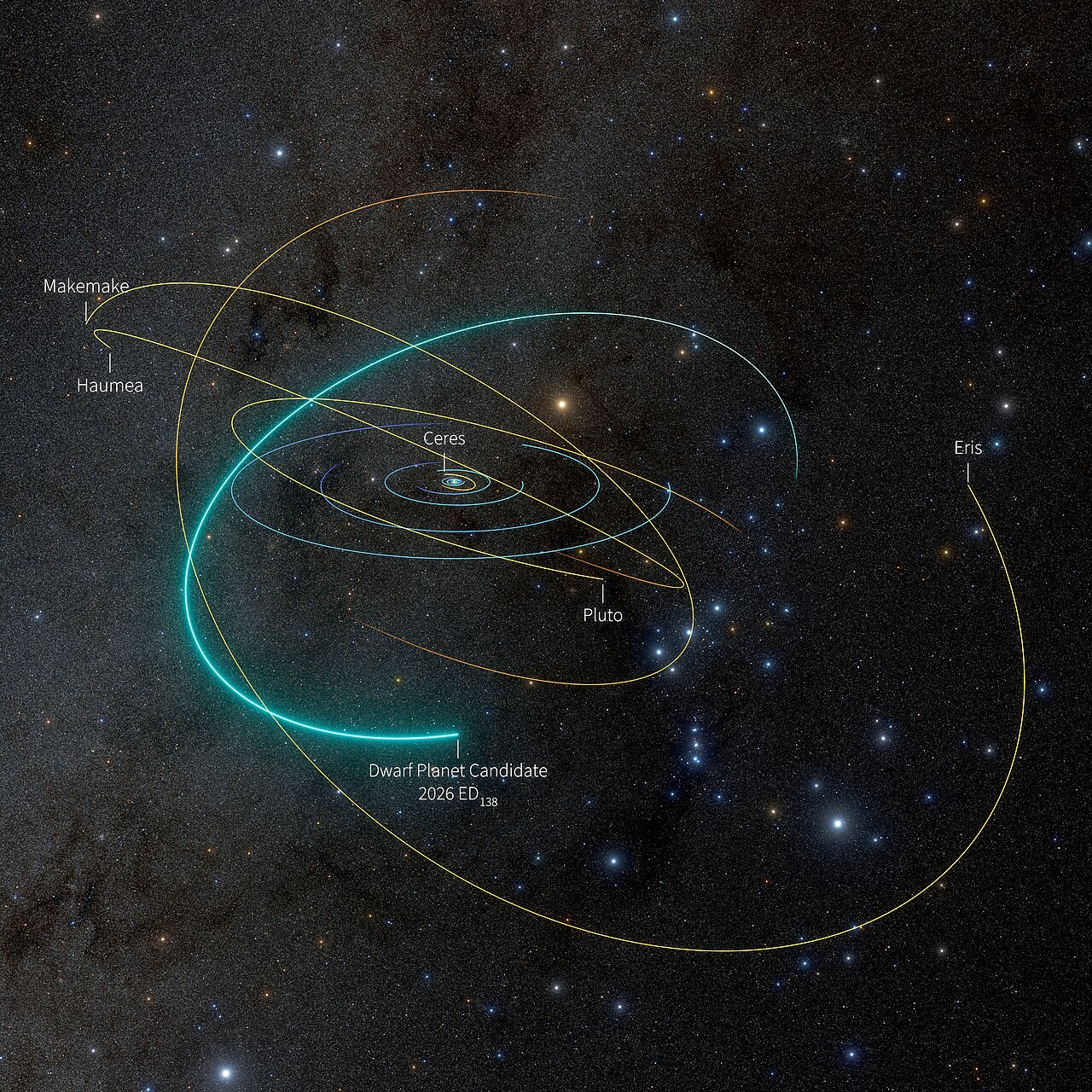
Astronomers at the Vera C. Rubin Observatory have announced a dwarf planet candidate in the solar system beyond Neptune's orbit. The object, provisionally designated 2026 ED138, has no official name. It would be the solar system's sixth dwarf planet.
The discovery came from running billions of pieces of Rubin data through a search code developed by Matthew Holman and Kevin Napier of the Center for Astrophysics | Harvard & Smithsonian. Holman said his first reaction was disbelief, and that he checked whether he or the code had made an error.
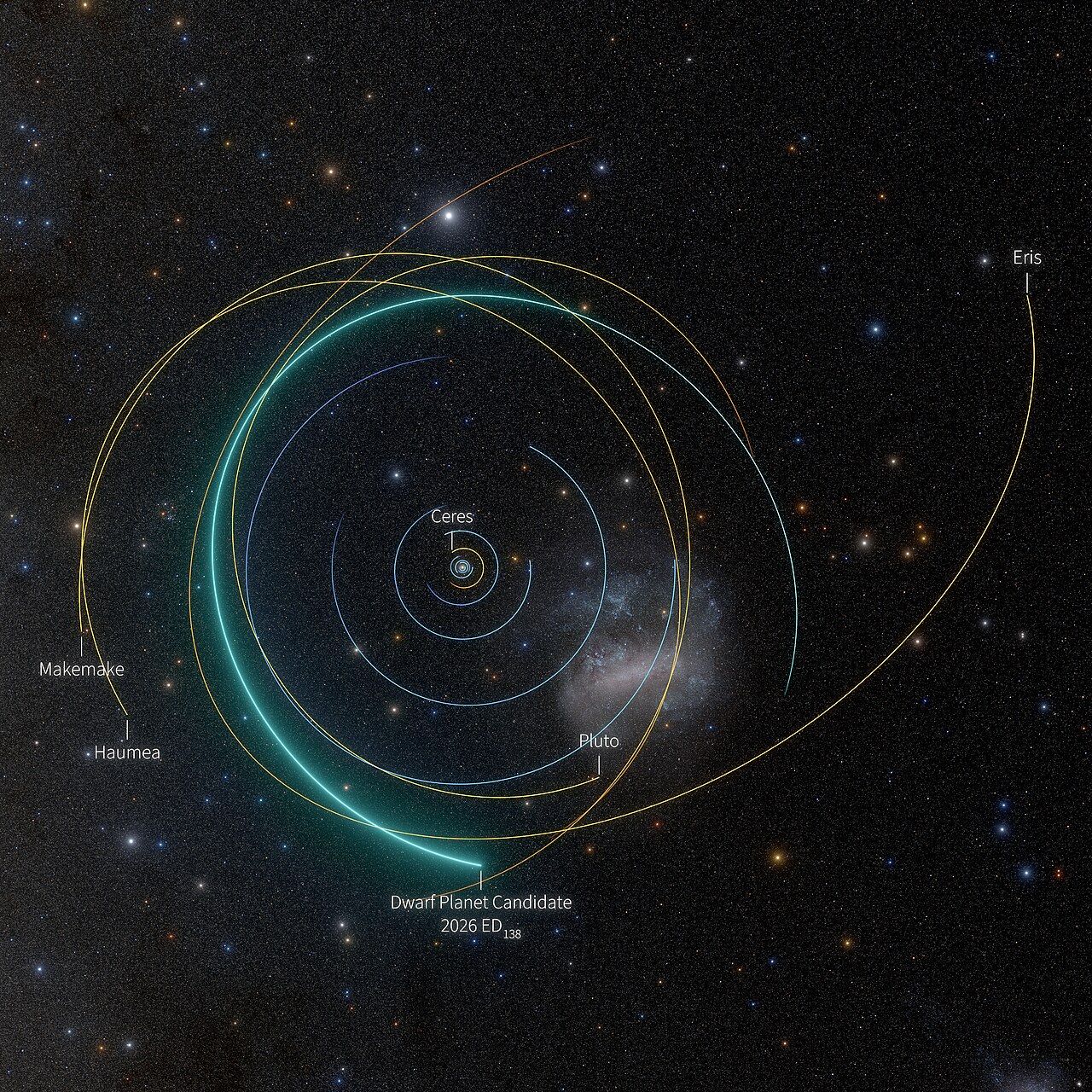
Holman and Mario Jurić of the University of Washington then found 30 more Rubin observations of the object, dated between March and July 2026. Other observation tools turned up sightings back to 2016, which let the pair begin mapping its orbit.
The object is about 46 times as far from the sun as Earth, compared with 40 times for Pluto. Its orbit is tilted about 25 degrees off the solar system's plane. Initial measurements put its diameter between 600 and 1,500 kilometres.
Sourcescientificamerican.com