Study finds highly magnetised white dwarfs could exceed the Chandrasekhar limit
A new study shows how strongly magnetised white dwarfs could grow beyond the 1.44 solar mass Chandrasekhar limit.
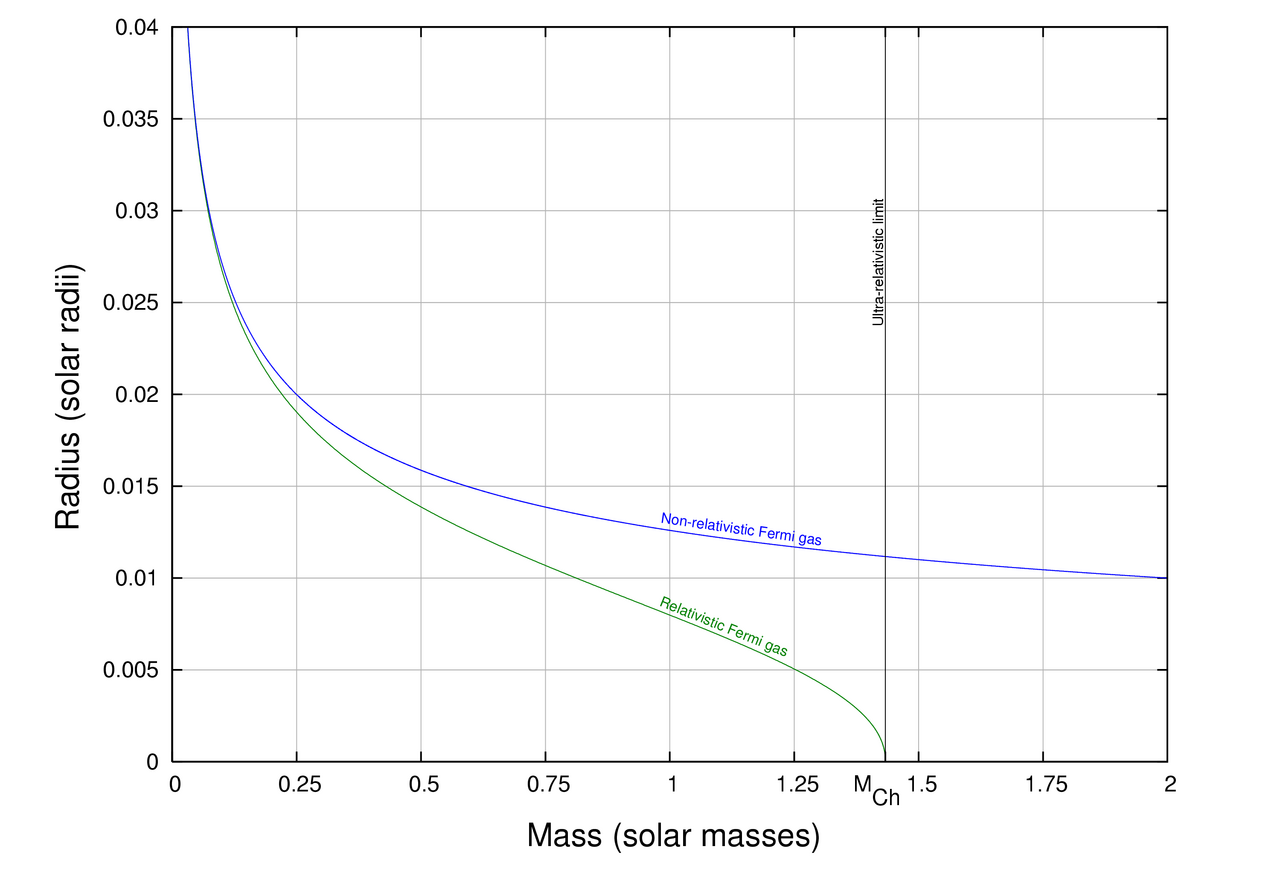
A new study in The Astrophysical Journal Letters shows how highly magnetised white dwarfs could overcome the Chandrasekhar limit, and how such super-Chandrasekhar white dwarfs could form.
Subrahmanyan Chandrasekhar showed in the 1930s that a white dwarf could not have a mass greater than 1.44 suns. In 2003, the Supernova Legacy Survey observed a supernova that appeared to defy that limit, and similar events have been seen since.
The study focuses on magnetic fields. In a highly magnetised white dwarf, electrons interact with the field in a way that lets them push back more easily against gravity. In theory, such a star could reach nearly 3 solar masses before collapsing.
The open question is whether a Sun-like star could have such a strong field and still collapse into a white dwarf. To test it, the team ran simulations using a modified version of the STARS stellar evolution code.
Sourceuniversetoday.com